
As seen on Rick Steves' Europe (PBS) and in The New York Times •
Across Loch Ness, under Urquhart Castle, and up to Ben Nevis
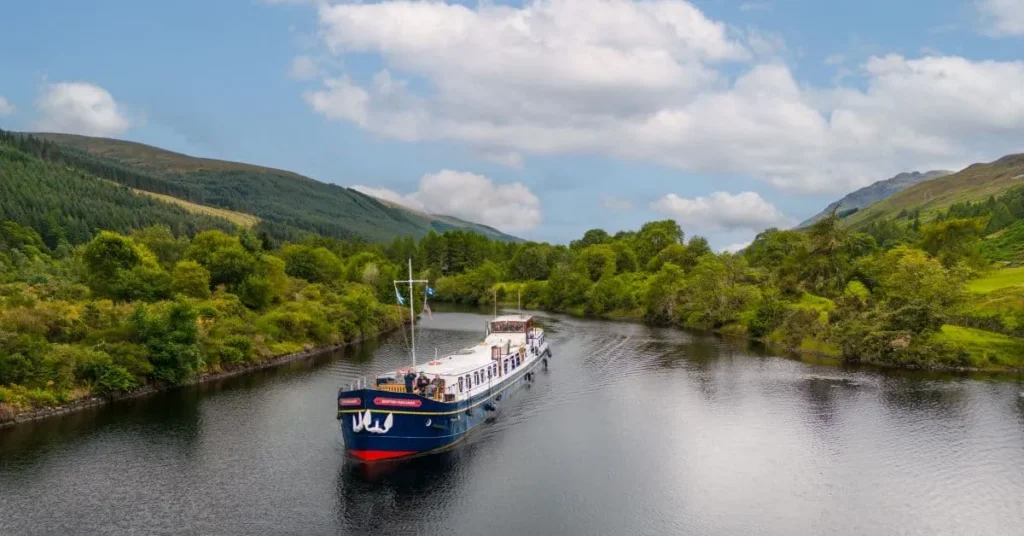
On Sunday you are met at the Kingsmills Hotel in Inverness and driven by private chauffeured minibus to the barge at Muirtown. Champagne is poured, and if you feel like stretching your legs there is an early evening walk down to the sea lock with views over the Moray and Beauly Firths. Then a single malt from the bar before your first dinner on board.
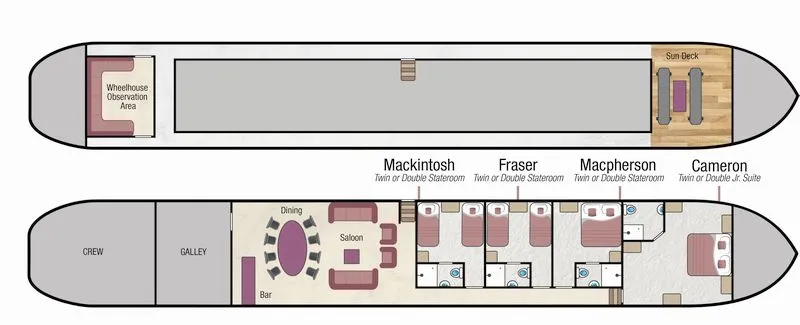
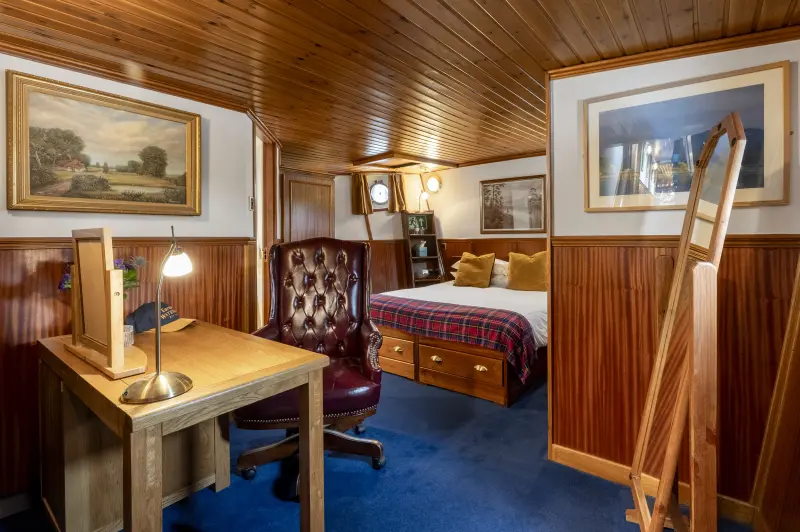
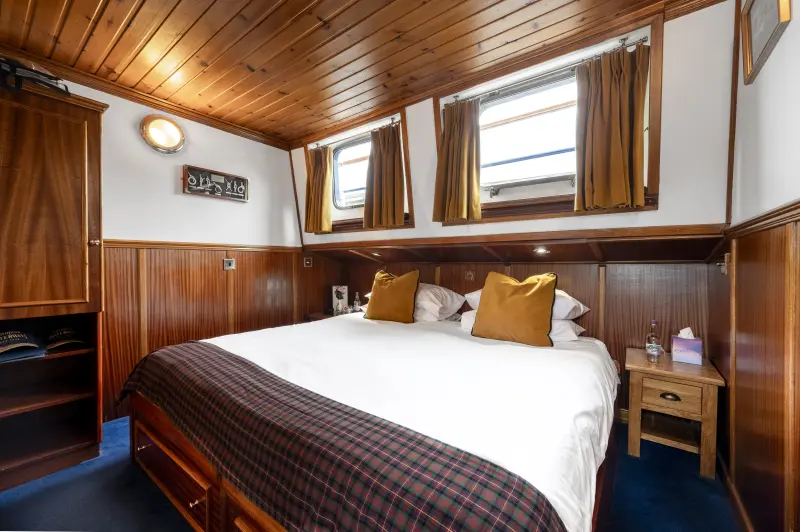
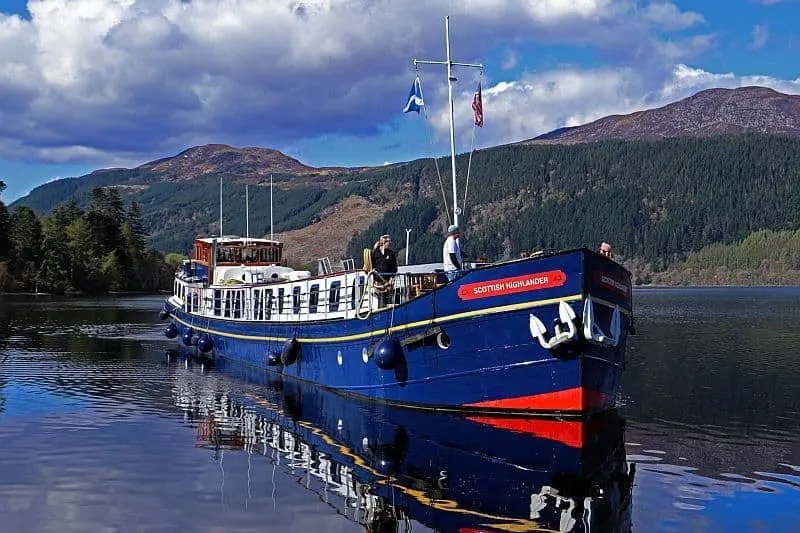
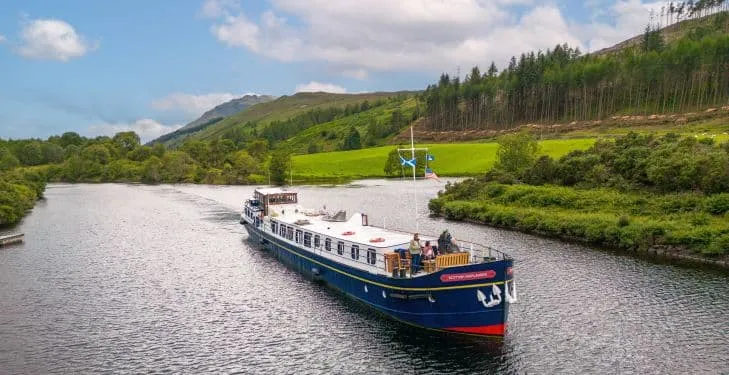
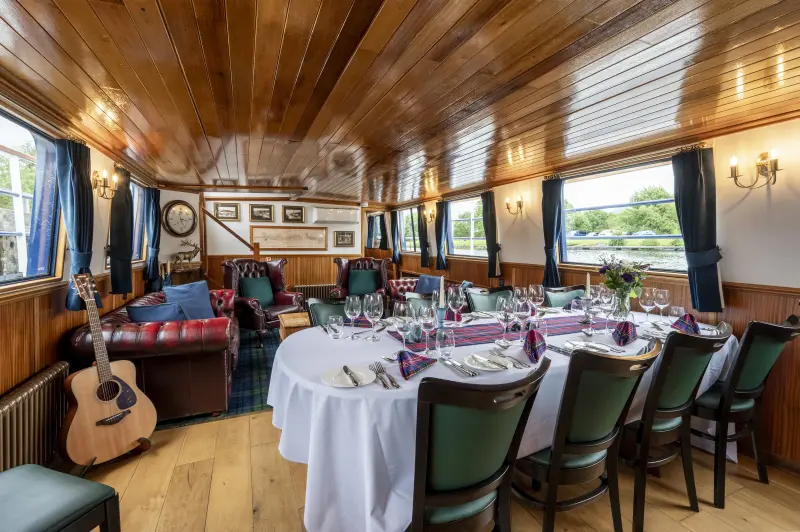
The Scottish Highlander is 117 feet of hotel barge with the feel of a comfortable country house: subtle tartan furnishings and paintings, a saloon panelled in rich-coloured wood with large picture windows and leather Chesterfield sofas, and a bar stocked with single malt whisky. Eight guests at most, in three twin or double staterooms and one larger junior suite, each centrally heated with en suite facilities. Behind the wheelhouse there is an observation area, and forward there is deck seating with long views up the glen.
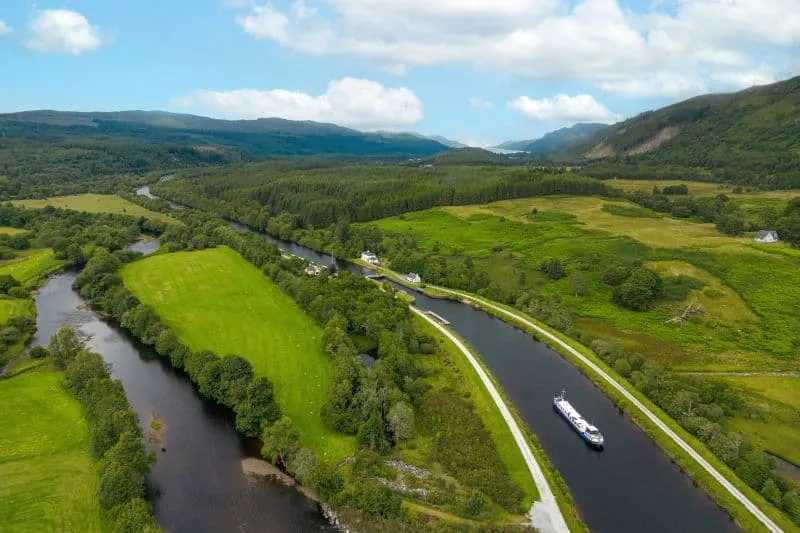
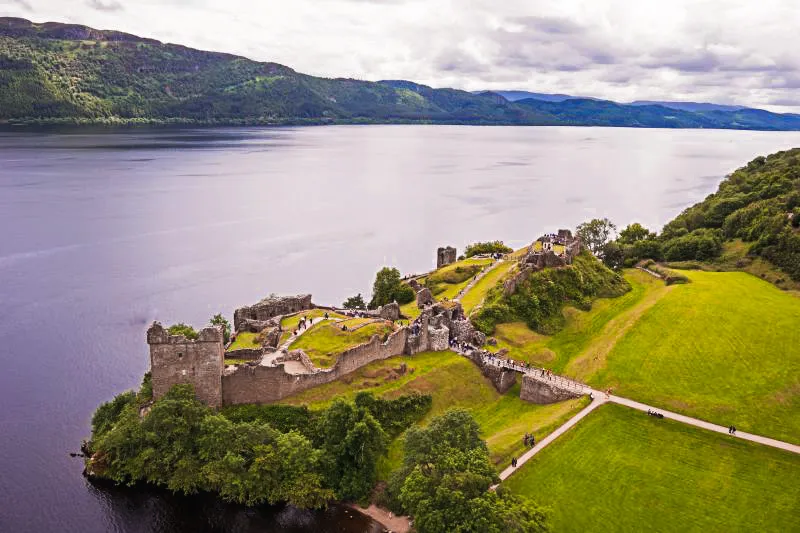
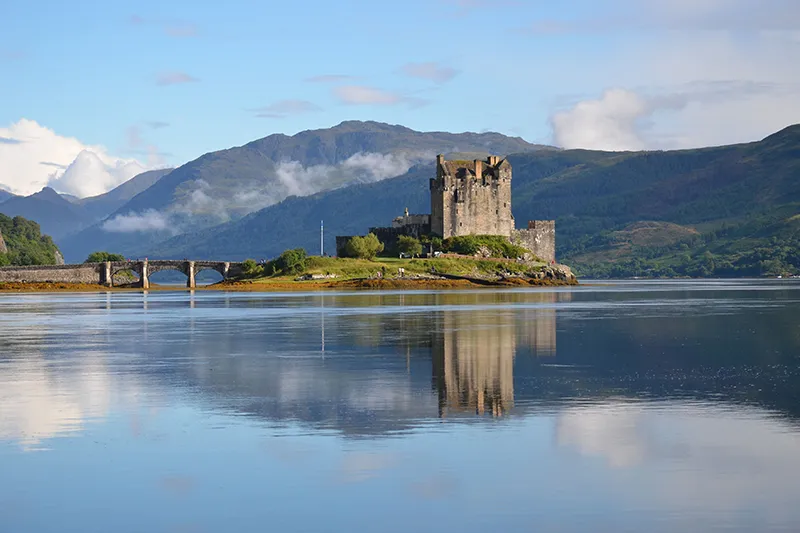
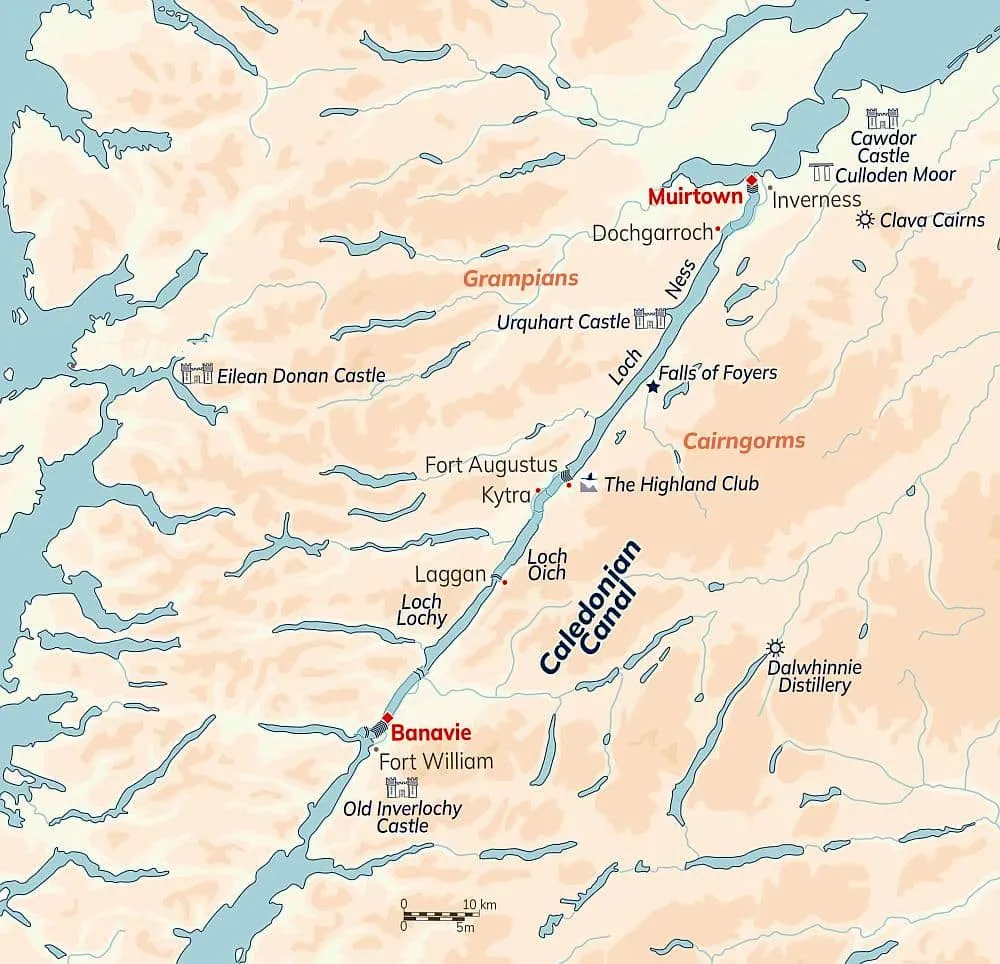
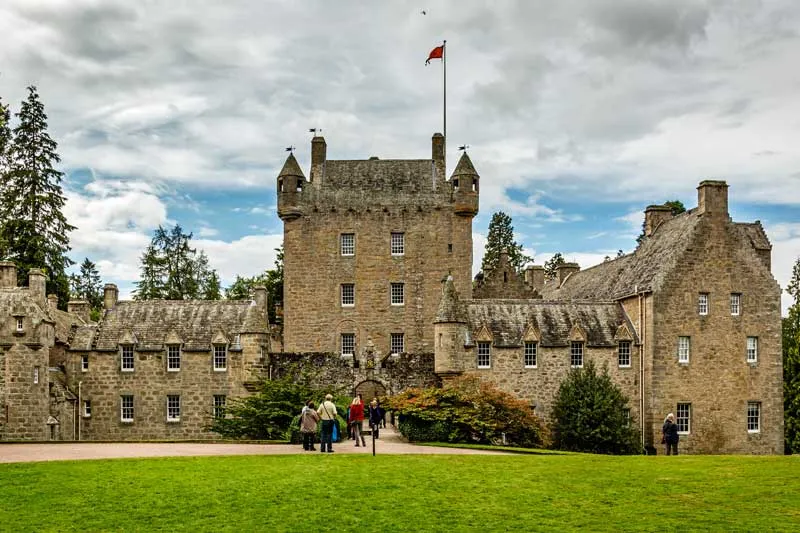
The route is the Caledonian Canal and the chain of lochs it links: Loch Ness, where the barge passes close beneath the ruins of Urquhart Castle, then Loch Oich and the run down to Banavie under Ben Nevis. Ashore, the week takes in Cawdor Castle, Culloden Moor, Eilean Donan, a falconry demonstration on the banks of Loch Ness, and a tour and private tasting at the Dalwhinnie Distillery. Book the whole barge for your group, or join a departure by the cabin.
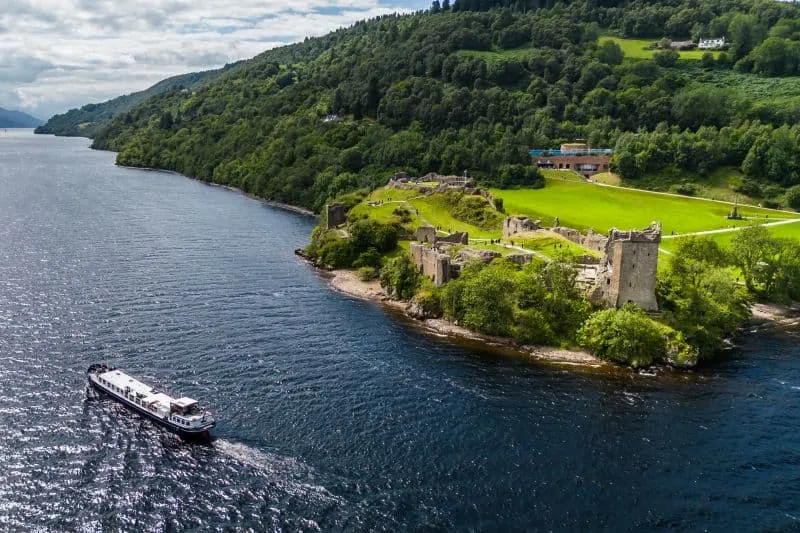
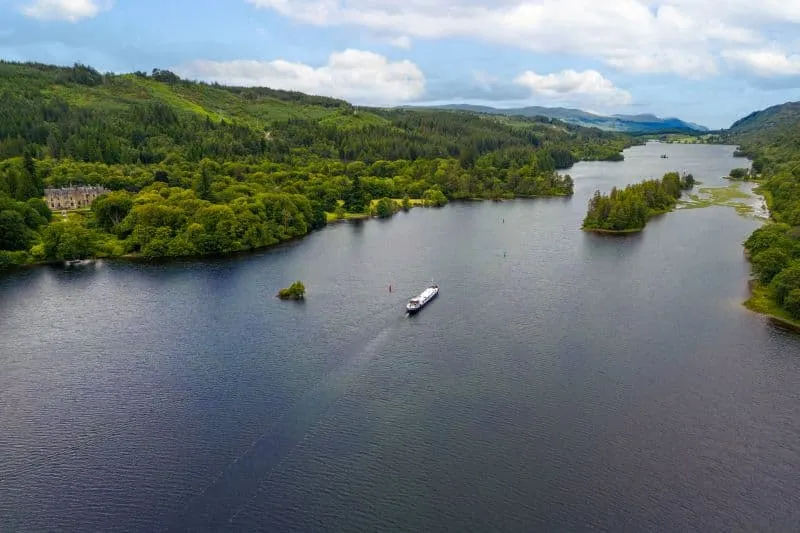
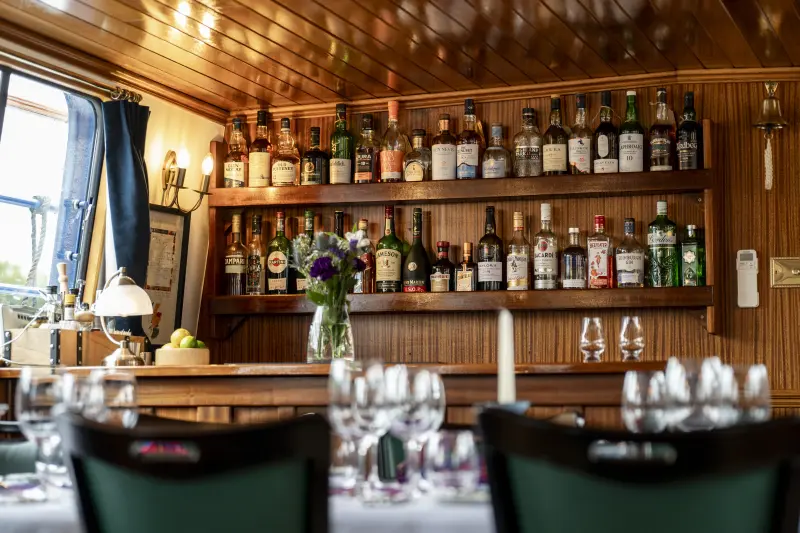
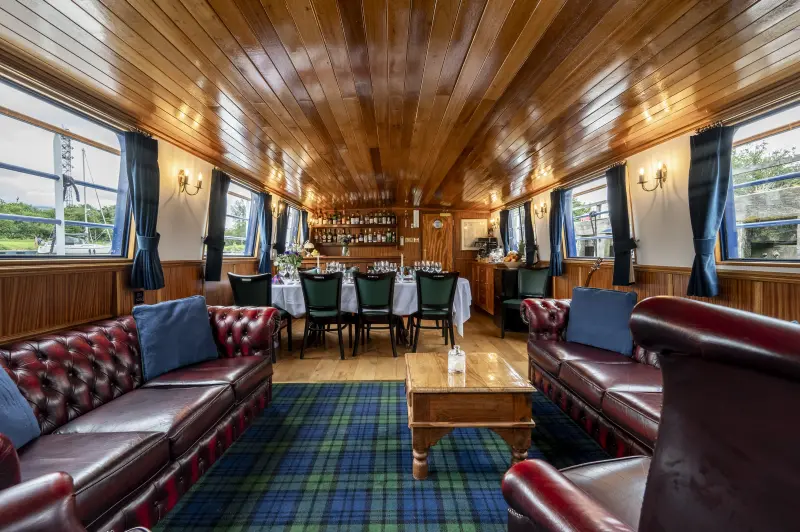
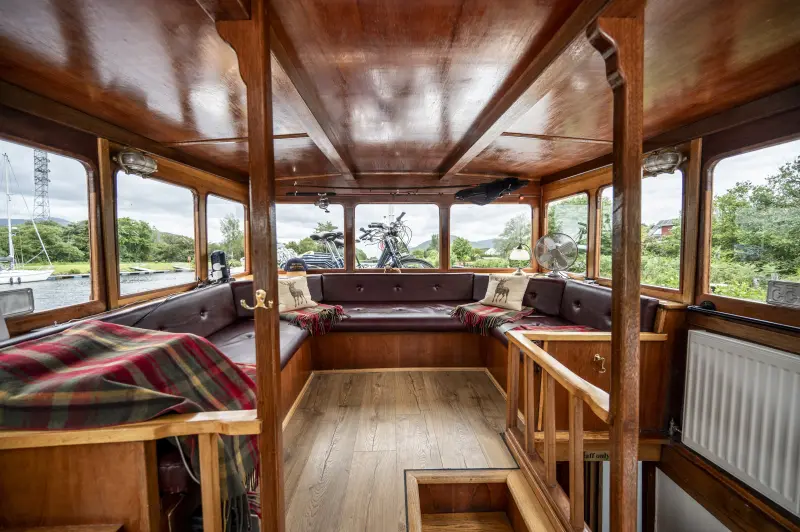
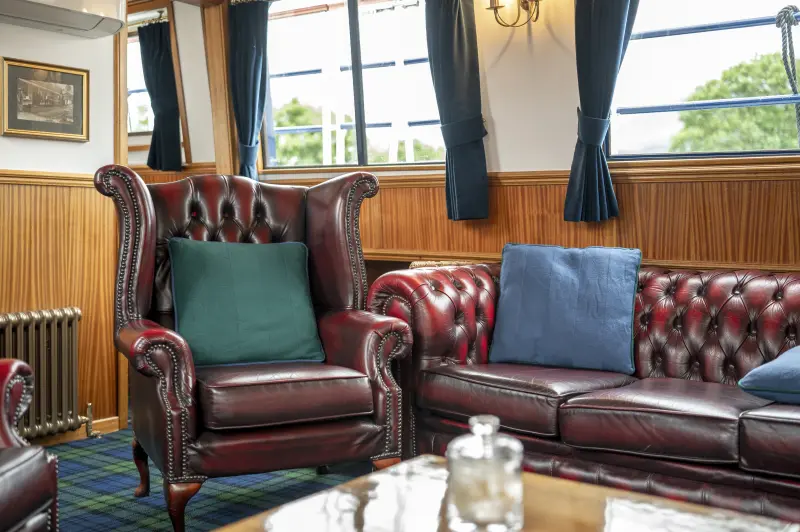
The Scottish Highlander is a 117 foot hotel barge built for the Caledonian Canal, and she is graded Deluxe on the operator’s own deck plan. The atmosphere inside is that of a comfortable country house rather than a hotel: subtle tartan furnishings and paintings, a saloon panelled in rich-coloured wood with large picture windows, leather Chesterfield sofas, and a well-stocked bar with a shelf of single malt whisky. Eight guests sleep in three twin or double staterooms and one larger twin or double junior suite, each centrally heated and each with en suite facilities. Behind the wheelhouse there is an observation area for watching the locks work, and the forward deck has seating with far-reaching views. Cooking is traditional Scottish fare, salmon, game and seafood, prepared by a Master Chef.

These comments are from FCBC guests and are not attributed to a particular barge. Source: French Canal Boat Company.
The questions guests actually ask before their first barge trip. If yours is not here, call Kim at 888-229-2315.
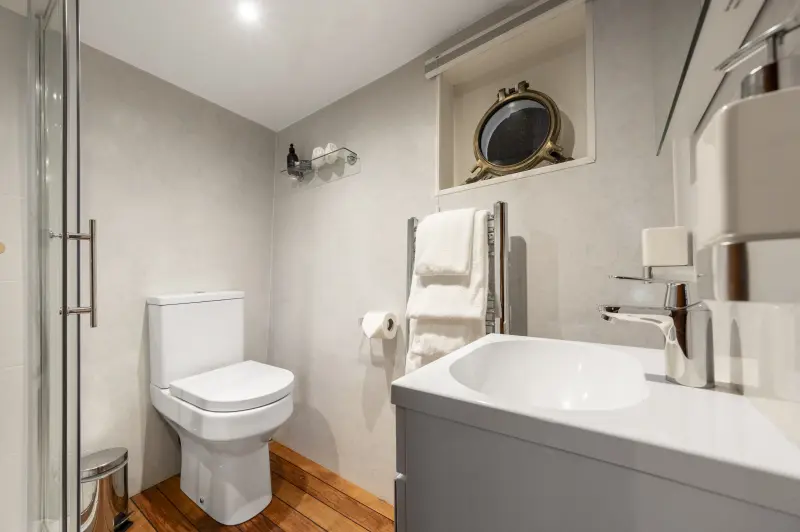
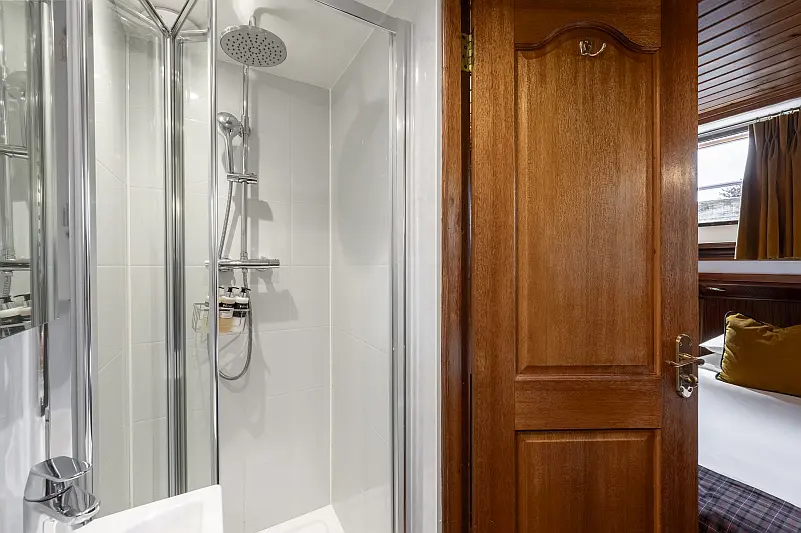
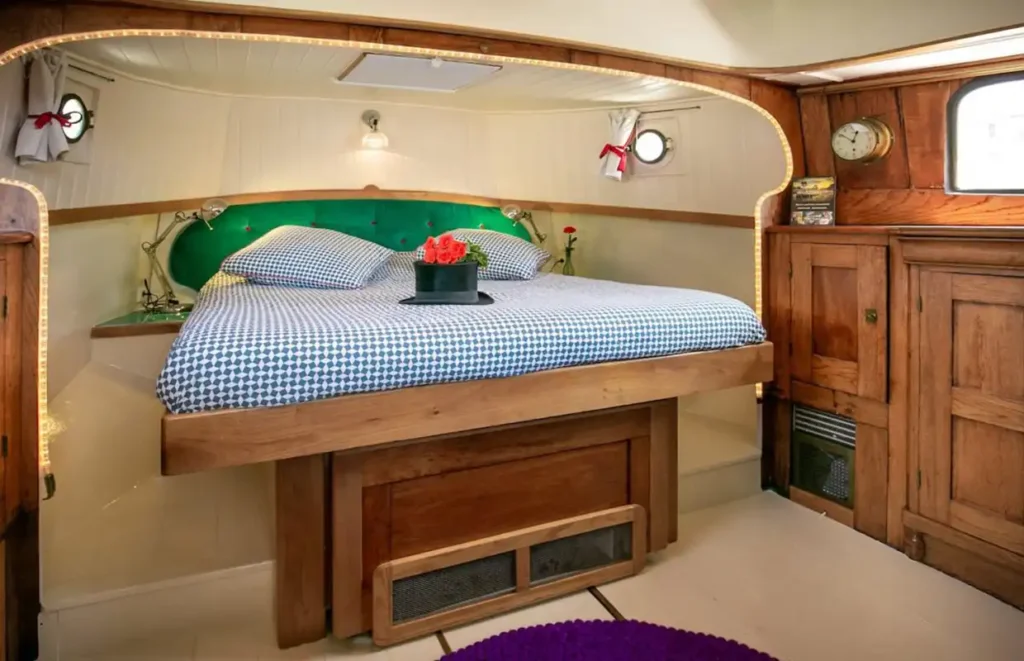
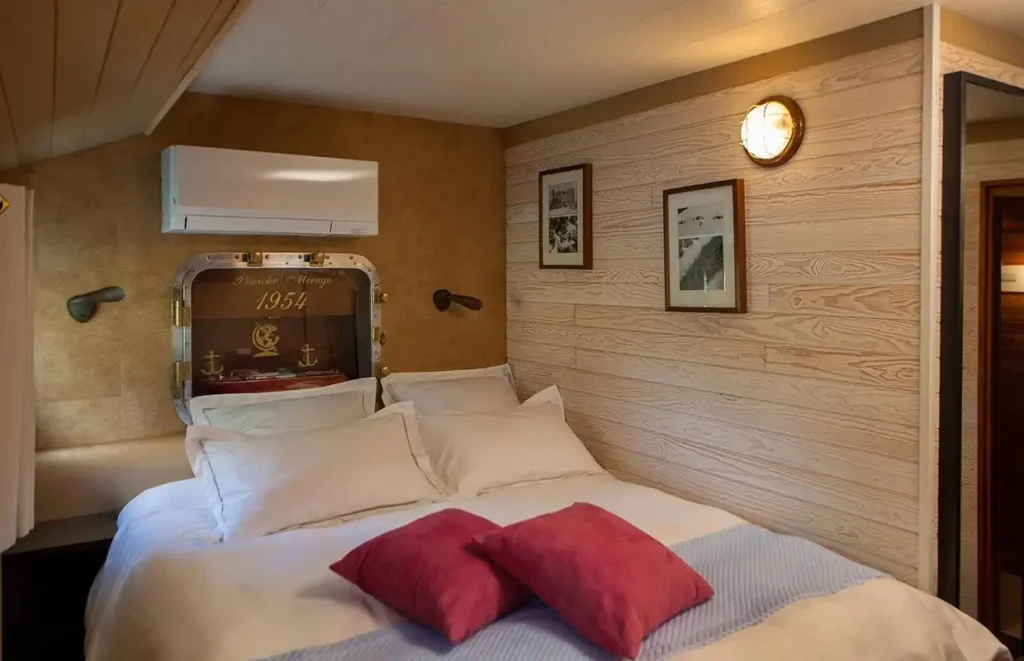
The Scottish Highlander sleeps eight in three twin or double staterooms plus one larger twin or double junior suite. Every room has its own en suite facilities and is centrally heated, so you never share a bathroom with other guests and you are not cold on a Highland morning. The rooms are compact, closer to a well-fitted yacht cabin than a hotel room ashore, and housekeeping refreshes them daily. If a large hotel bathroom matters a lot to you, that is the one thing worth picturing honestly before you book.
A cabin booking means you join a set departure by the stateroom, from $7,390 per person at 2027 season rates, or $14,780 per cabin, and share the barge, the table, and the excursions with other guests. Solo travelers can take a stateroom with a single supplement of $2,700. A private charter is the whole barge for your group alone, up to eight guests, and whole-boat charter rates for the Scottish Highlander are quoted on request. Tell us which way you want to travel and we will point you to the right weeks.
This is the question almost every first-time guest is too polite to ask. The honest answer: it feels like being looked after, not watched. A small crew runs the week for eight guests, with a captain, a Master Chef, a guide, and a host aboard. They have their own quarters and their own rhythm, they read when you want to chat and when you want space, and by day two most guests stop thinking about it.
The rhythm on most days: a stretch of cruising through the Great Glen, a guided excursion to a castle, a battlefield or a distillery, lunch aboard, then free hours to walk the canal path beside the boat, sit on the forward deck, or do nothing at all. The Caledonian Canal runs between mountains for most of its length, so the view changes even when the plan does not. Guests who need a packed schedule should say so before booking. Nobody comes home saying the week felt long.
Highland weather does what it likes, and the crew build the week around that. Cruising on Loch Ness and Loch Oich can be adjusted when the wind gets up, the falconry demonstration at the Highland Club runs only if the weather allows, and excursions travel by private chauffeured minibus whatever the sky is doing. The published route is a sample and is subject to change with local conditions. On alternate weeks the cruise runs in the reverse direction. Travel insurance is a sensible backstop for the things none of us control.
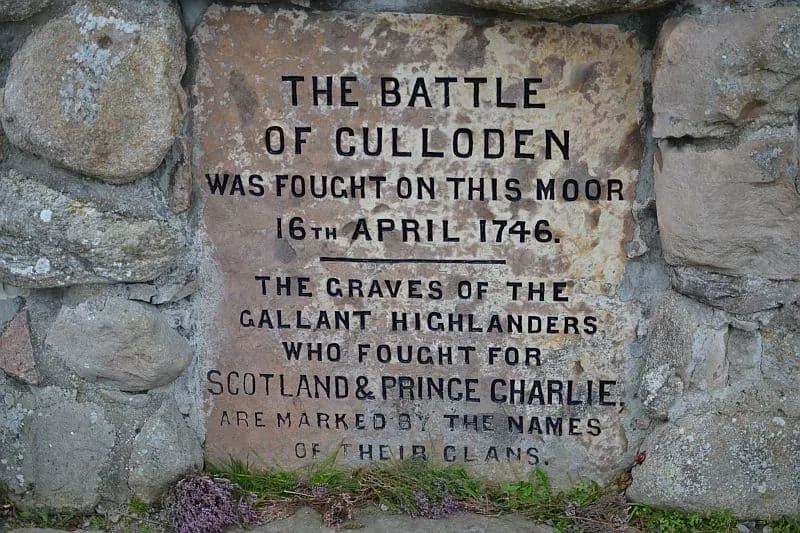
This is the Caledonian Canal and the Great Glen: a cruise across Loch Ness that passes directly beneath the 13th century ruins of Urquhart Castle, Culloden Moor where the last major battle on British soil was fought in 1746, Cawdor Castle and its gardens, Eilean Donan on its island where three sea lochs meet, a tour and private tasting at the Dalwhinnie Distillery, and a final mooring at Banavie beneath Ben Nevis. It is a week of mountains and water rather than vineyards and villages, which is exactly why people pick it.
Guests are met at the Kingsmills Hotel in Inverness on Sunday and driven to the barge by private chauffeured minibus. On Saturday morning you are returned by minibus to your choice of location in Inverness. Inverness has its own airport with connections through London, Edinburgh, Glasgow and Amsterdam, and it sits at the end of the rail line north from Edinburgh and Glasgow. Private charters can arrange other pickup points; ask Kim when you book.
Easier than most trips you have taken. You fly into Inverness, or into Edinburgh or Glasgow and continue by train or a short hop north, and everything after the meeting point in Inverness is handled for you. One suitcase, one meeting point, and the crew takes it from there. Kim sends exact meeting details well before departure, and she will help you plan nights in Inverness or Edinburgh on either side if you want them.
Yes, it is possible to drive and park at the boarding ports. Get in touch and we will give you the specifics for your departure point.
Traditional Scottish cooking prepared aboard by a Master Chef: salmon, game and seafood, with wines chosen to match. Breakfast, lunch and dinner are served on board most days, and on two evenings of the week you dine ashore at a local restaurant. The bar is well stocked, including a shelf of single malt whisky, and open at any reasonable hour.
There is mobile coverage along most of the Great Glen, though it drops out between the hills and along parts of the lochs. Treat it as countryside signal rather than city signal, enough for email, photos and a call home on most days.
A saloon with rich wooden panelling, large picture windows, leather Chesterfield sofas and a well stocked bar; an observation area behind the wheelhouse where you can watch the locks and the lochs go by; and forward deck seating with long views up the glen. The atmosphere is that of a comfortable country house, with subtle tartan furnishings and paintings.
The Caledonian Canal is the reason this route exists: a chain of locks links the lochs of the Great Glen from coast to coast. You climb the Muirtown flight on the first cruising day, work up the Fort Augustus flight mid week, and finish above Neptune’s Staircase at Banavie. Locks are easy places to step ashore and walk, and much of the canal has a good path running beside it.
Whisky runs through the week: a tour and private tasting of several single malts at the Dalwhinnie Distillery, a stocked malt shelf behind the bar, and a dram offered after dinner. None of it is compulsory. Guests who do not drink still get the distillery tour, which is as much about water, barley and the building as it is about the glass. Tell Kim when you book and the crew will make sure nobody has to explain themselves twice.
Yes. Tell us at the time of booking. With four guests at most and the chef herself taking the request, dietary requirements and preferences are handled personally rather than passed down a kitchen line.
No. Dinner is a gourmet event, but the dress code is relaxed: think smart casual, the way you would dress for a nice dinner at a friend\’s home. No jackets required, no gowns, no fuss. Comfortable shoes matter more than anything formal.
Canals are not the ocean, and this route is mostly canal and sheltered freshwater loch. The water is flat, the barge moves slowly, and it moors every night, so there is no rocking while you sleep. Loch Ness and Loch Oich are big enough to pick up a chop when the wind is strong, which is the one place on this route where you might notice movement. If you have avoided cruising because of motion sickness, this is about as gentle as boats get.
Barging is one of the most accessible ways to see rural Europe, with one honest caveat: barges are working boats, so expect a boarding ramp or gangway and at least one set of stairs between decks. There are no elevators. If stairs are a real concern, call Kim before booking. She will tell you plainly whether this barge is the right fit.
You are never far from help. The route runs through inhabited country and moors near villages and towns, with Inverness and Fort William at either end of the glen and pharmacies easy to reach. Your captain can call emergency services from anywhere on the canal. Bring your medications in your carry-on plus a copy of your prescriptions, and tell Kim about any condition when you book so the crew is prepared, quietly and without fuss.
On a private charter the boat is your group’s alone, and the guide can shape each day to suit different ages. For shared cabin departures, ask Kim about the minimum age on this barge before you book.
More than a coach tour, less than a hiking holiday. Castles and gardens mean uneven ground, gravel paths and stairs inside old buildings: Cawdor, Eilean Donan and Urquhart all have steps. Culloden Moor is a flat outdoor walk on made paths. The optional walks beside the canal are level and as long or short as you want, because the barge is right there. Nothing is compulsory, the minibus goes door to door, and sturdy shoes with grip are the one thing you should not skip.
Cool and changeable. Inverness averages a daily high near 64 F in July and near 55 F in October, with rain falling on nine to eleven days a month through the summer. Pack layers, a waterproof jacket and a warm top for the evening deck, and the week works in any of it. Midges are the honest second half of the answer: the Highland midge is about from roughly late May to early September, worst at dawn and dusk in still damp air near sheltered water, and gone as soon as there is a breeze or open loch. Repellent works, a head net costs almost nothing, and most guests find the breeze on deck does the job.
No, and you would be in good company. Most barge guests are in their 50s, 60s, 70s and beyond. The pace is unhurried by design: the barge moves at about four miles per hour, and there is no packing and unpacking between hotels. You settle in once and France comes to you. Guests who want more activity can walk or cycle the towpath beside the boat; guests who want none can watch it all from a deck chair.
Very unlikely. Canals are flat, placid water, and the barge moves at a slow, steady pace. If you are prone to motion sickness on boats, the canal is about as gentle as it gets. There are no waves and no swell, and there is no rocking at night because the barge moors every evening. If motion sickness has kept you off cruise ships, this is the boat that was built for you.
Yes. You are on flat, calm water in settled countryside, never far from a village. Your hosts handle every lock and mooring. On deck, the usual boat rules apply: mind the rails, wear sensible shoes, and take the towpath at your own pace. Children need supervision on deck, the same as at any waterfront.
Tipping is discretionary and customary at the end of the week, given once to the captain and shared among the crew rather than handed out nightly. Scotland uses pounds sterling, not euros, so bring sterling if you plan to tip in cash. We are not going to quote you a percentage we have not confirmed for this barge. Ask Kim before you travel and she will tell you the amount and the method the crew prefer.
Yes, we recommend it plainly, and so does every honest operator. A barge week is a significant purchase with a real cancellation schedule. Buy a policy soon after booking, and ask about Cancel For Any Reason coverage, which usually must be added within two to three weeks of your first payment.
Kim confirms availability directly with the barge owner. A 25% deposit is due when booking, with the balance due 90 days before departure. Bookings made within 90 days require full payment. Your checkout shows the exact amounts and due dates. You can cancel within 24 hours after your initial booking payment and receive a full refund. Contact us within that window. After 24 hours, payments are non-refundable if you cancel, including for illness or inability to travel. You may substitute passengers by contacting us. If the barge owner cancels your cruise for any reason, we will provide a full refund. This differs from a route change where the trip still operates. Read the full Booking Terms and Conditions.
We strongly recommend travel protection for non-refundable trip costs and medical evacuation. Cover and exclusions depend on the policy you buy. Read the policy and check with the insurer; accepting our booking terms does not buy or decline insurance. Read the full Booking Terms and Conditions.
You can cancel within 24 hours after your initial booking payment and receive a full refund. Contact us within that window. After 24 hours, payments are non-refundable if you cancel, including for illness or inability to travel. You may substitute passengers by contacting us. If the barge owner cancels your cruise for any reason, we will provide a full refund. This differs from a route change where the trip still operates. Lock repairs, drought, flooding or unsafe conditions may require an alternative route. A route change does not by itself give you a right to cancel for a refund. If the owner cancels the cruise itself, the full-refund policy applies. Read the full Booking Terms and Conditions.
If the barge owner cancels your cruise for any reason, we will provide a full refund. This differs from a route change where the trip still operates. Read the full Booking Terms and Conditions.
Lock repairs, drought, flooding or unsafe conditions may require an alternative route. A route change does not by itself give you a right to cancel for a refund. If the owner cancels the cruise itself, the full-refund policy applies. Read the full Booking Terms and Conditions.
You may substitute passengers by contacting us. The booking terms do not promise a refund or automatic credit for changing dates. Contact us about a requested change before making other travel arrangements. Read the full Booking Terms and Conditions.
You can cancel within 24 hours after your initial booking payment and receive a full refund. Contact us within that window. After 24 hours, payments are non-refundable if you cancel. Passenger substitutions are permitted. If the barge owner cancels your cruise for any reason, we will provide a full refund.
Other voyages from the French Canal Boat Company fleet. A quick way to compare on the things that matter most: how many guests, which region, and what each week is really about.
Every voyage in the fleet is booked and looked after by Kim directly. See all departures.
Until it is live, call Kim at 888-229-2315, or request the full itinerary to start the conversation.
The WeTravel booking and deposit checkout embeds here at launch. Guests will choose their week and place the deposit without leaving the page.
Until it is live, call Kim at 888-229-2315, or request the full itinerary to start the conversation.